
Are You Practicing Like a Professional Athlete Or Just Talking a Big Game?
“Practice isn’t the thing you do once you’re good. It’s the thing you do that makes you good.”
Malcolm Gladwell
Elite sales professionals don’t become great because they occasionally have a great day, they become great because they repeatedly practice the behaviors that create great results.
Prospecting, asking better questions, listening deeply, creating meaningful value, building authentic relationships, and following through aren’t events; they're disciplines.
The difference between average and exceptional isn’t usually knowledge, it’s the willingness to consistently sharpen the skills that matter most.
You don’t wait until you’re confident to practice, you practice until confidence becomes the byproduct.
Your clients and future clients are overwhelmed with the sea of sales sameness, consistency becomes one huge competitive advantage.
Every call, conversation, meeting, follow-up, and client interaction is another opportunity to practice showing up with authenticity, intention, and meaningful value.
The goal isn’t perfection, its progress repeated relentlessly.
When disciplined habits become part of who you are, your skills improve, your trust deepens, your conversations get better, and your results compound.
You don’t practice because you’re already great. You practice because you’re committed to becoming the kind of professional your clients can trust, value, and believe in.
As we start off our time together, I ask you to reflect on this... Seniority in sales means less than you think. Your habits, your preparation, your consistency, and the experience you create are what clients remember.
Time To Get Uncomfortable
Are you practicing like a professional athlete or are you simply talking a big game?
Professional athletes don’t get to the top of their game because they've been around the longest.
They don’t walk into a championship and say, I’ve been doing this for 20 years, so I should be good.
They practice, prepare, study the competition, review film, work on fundamentals, identify weaknesses, repeat the basics until the basics become instinct, and when they think they've mastered something, they go back and practice it again.
Now, let's look at sales.
There are salespeople with 10, 15, 20, even 30 years of experience who are still relying on the same pitch, the same prospecting habits (if they're even prospecting), the same follow-up, the same client conversations, and the same assumptions they made years ago.
They have experience, but are they experienced? My friends, there's a difference.
Clients are expecting more these days than ever before. They are more informed, have more choices, can research you, your company, your competitors, your products, and your reputation before you ever get a chance to speak with them.
The bar for what clients expect from salespeople is surprisingly low. That isn’t just a problem, it’s an opportunity.
When the bar is low, you don’t have to do something extraordinary to stand out.
You must become extraordinary at the things that matter. You must become the salesperson client's trust.
The salesperson who brings insight
The salesperson who makes things easier
The salesperson who follows through
The salesperson who does what they say they are going to do
The salesperson clients are genuinely glad to hear from
People, simply put... That's raising the bar.
Your Mirror Moment
If your clients were sitting around a table talking about you when you weren’t there, what would they say?
Would they say...
That’s someone I trust
They always bring me something useful
They understand our business
They make things easy
When they say they’re going to do something, it gets done
Or would you hear...
They’re nice, but…
They only call when they want something
They don’t really understand our business
They’re always following up on something that should have already been done
They talk a great game, but...
A tough mirror to investigate, but great sales professionals don’t avoid the mirror, they use it.
Seniority Doesn’t Make You a Professional
One of the most dangerous sentences in sales is... I’ve been doing this for a long time.
Question becomes... What have you been doing for a long time?
There’s a massive difference between years of experience and the same year of experience repeated 20 times.
Seniority can give you perspective, relationships, pattern recognition, however; seniority doesn’t automatically make you better.
I believe seniority can sometimes make you less curious.
You start thinking you have seen it all
You stop asking questions
You stop studying
You stop experimenting
You stop practicing
You start relying on what worked five years ago, may I even say 10 years ago
Meanwhile, your clients have changed, their customers have changed, their businesses have changed, their expectations have changed, technology has changed, competition has changed, and the definition of meaningful value has changed.
So why wouldn’t your approach change too?
Professional athletes understand something that salespeople sometimes forget... You don’t get to stop practicing just because you have become experienced, you practice because you're experienced enough to know how quickly the game changes.
Your Clients Don’t Care How Long You’ve Been Selling
Your client doesn’t wake up thinking... I hope I get a salesperson today with 18 years of experience.
They wake up thinking... I hope someone can help me.
That’s it, plain and simple, end of story.
Your clients have...
Problems
Pressure
Deadlines
Budgets
Customers
Employees
Competitors
Internal politics
What they don’t need is another salesperson adding noise to their day, however; what they do need is someone who can make their world better.
Charles Green captured this beautifully,
“What buyers really want, even when they don’t say so, is a seller they can trust.”
Read that again, please, a seller they can trust.
It didn't say someone with the slickest presentation, biggest ego, or the lowest price, but a seller they can trust.
Trust isn’t built through one great meeting, it’s built through hundreds of little moments.
That’s why John Wooden’s observation is so relevant to sales,
“It’s the little details that are vital. Little things make big things happen.”
The email you said you’d send, the introduction you promised to make, the research you completed before the meeting, and the question you asked because you genuinely wanted to understand.
How about the article you sent because it was relevant, not because you wanted to create an excuse to call, or the follow-up you made when there was nothing immediately in it for you.
Folks, all that stuff are your reps, your practices, and those are the moments that build your professional reputation.
Training or Just Showing Up
Imagine an athlete who only practices when they feel motivated, they wouldn’t last long.
Yet salespeople routinely allow their prospecting, preparation, follow-up, learning, and development to be dictated by how they feel that day.
Busy day? I'll skip prospecting.
Slow day? Maybe I'll prospect.
Feeling confident? Maybe I'll make the call.
Feeling discouraged? I'll just push it off.
That’s not discipline whatsoever, that’s emotions controlling your calendar.
It’s not what you do occasionally that matters, it’s what you do consistently.
Professionals don’t ask... Do I feel like doing this today?
They ask... What does the standard require me to do today?
Your Mirror Moment
If you treated your sales career like a professional sport, what would your practice schedule look like?
Would you have dedicated time for...
Prospecting?
Account research?
Business and industry knowledge?
Reviewing lost opportunities?
Studying successful conversations?
Improving your questions?
Developing your communication skills?
Building relationships?
Preparing for important client meetings?
Following through on commitments?
Or are you simply hoping experience will carry you?
Professional salespeople don’t leave their development to chance, they create disciplined habits.
Your calendar reveals your real priorities, not your goals, your intentions, or what you tell your manager, but your calendar.
Stop Competing With Average
I believe this is the opportunity you have.
If the sales bar is low, you don’t need to become a superhero. What you need to do is stop behaving like average, as average sends generic messages.
Average talks about products, you bring business insight.
Average waits for opportunities, you go out and proactively build your pipeline.
Average follows up with, just checking in, you give people a reason to engage.
Average shows up unprepared, you do the work before the meeting.
Average sees relationships as a means to an opportunity, you build relationships because people matter.
Average promises, you follow through.
The opportunity is to become unmistakably different, and different doesn’t mean weird, it means valuable.
Practice Before You Perform
One of the greatest lessons from professional sports is that the performance everyone sees is supported by work almost nobody sees.
The audience sees the game, but what they don’t see are the thousands of hours of practice.
I hate to tell you this, but sales is the same.
The client sees the meeting, they don’t see the research.
They don’t see the preparation
They don’t see the prospecting blocks
They don’t see the rejected calls
They don’t see the books you’re reading
They don’t see the conversations you’re reviewing
They don’t see the work you put into becoming better
Eventually, they see the results of it.
Preparation is an act of respect.
The more you prepare, the more capable you are of earning the right to be heard and becoming useful rather than simply trying to impress, and that’s selling from the heart.
It means caring enough to do the work by simply just giving a rip.
Your Mirror Moment
What do you want to be known for by your clients? What does your so-called experienced brand say about you?
This isn't about what you say or how you position yourself on LinkedIn.
This isn’t your business card, your title, or the logo on your shirt.
This is all about the experience people have with you.
Every email
Every meeting
Every promise
Every missed deadline
Every thoughtful question
Every voicemail
Every follow-up
Every introduction
Every time you make something easier
Every time you create friction
You’re doing this whether you're intentional about it or not.
Folks, this means you have an enormous opportunity in front of you, so now the choice is yours to build the reputation around what people say about you.
Raise Your Personal Standards
When it comes to personal standards, you don't have to make this complicated.
You don’t have to reinvent your entire career tomorrow.
How about you start with 10%?
Improve your preparation by 10%
Improve your prospecting consistency by 10%
Improve your questions by 10%
Improve your follow-through by 10%
Improve the value you bring to clients by 10%
Improve the experience you create by 10%
Improve the relationships you invest in by 10%
Small improvements compound daily. Play out the law of marginal gain.
Your career isn’t defined by your best day, it’s defined by the standards you consistently live.
Your Last Mirror Moment
Imagine your biggest client sitting across from you.
They look you in the eye and say... Why should I trust you? Not your company, your product, your years of experience, but you?
What would you say?
Now imagine they ask... What makes you different?
Could you answer without talking about features, price, service, or your company’s history?
Lastly, they ask... Why should I want you involved in our business 3 years from now?
I'm here to inform you all that seniority isn’t your competitive advantage, your title isn’t your competitive advantage, your years in the business aren’t your competitive advantage, but what is? It's your ability to consistently create trust, meaningful value, and an inspirational experience.
That's something you can control and that's something worth practicing immediately.
Become the Sales Professional Your Clients Wish They Had
This week don’t simply go to work, but practice.
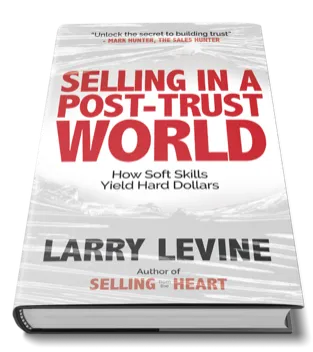
I encourage you to pick one area of the Trust Formula from Selling in a Post-Trust World.
Authentic Relationships - WHO you know.
Who should you know better inside of your client base?
Meaningful Value — WHAT you know.
What could you learn that would make you more valuable to your clients?
Inspirational Experience — HOW you show up.
What could you change about the experience your clients have with you?
Disciplined Habits — WHEN you show up.
What commitment needs to become non-negotiable?
Pick one behavior and put it on your calendar. Then, practice it, repeat it, measure it, and at the end of the week, look in the mirror again.
Ask yourself... Did I raise the bar?
The marketplace doesn’t need more salespeople who can talk a big game, it needs professionals who can back it up.
Professionals who prepare
Professionals who care
Professionals who create meaningful value.
Professionals who follow through
Professionals who understand that trust isn’t claimed, it is earned.
Professionals who know that the next level of their career isn’t waiting for them to become more senior.
So… Are you practicing like a professional athlete? Or are you just talking a big game?
The mirror is yours, now go raise the bar.
Originally published on Larry Levine's LinkedIn.